



F. N. Sheppard & Co. Location
Belting Specialties
Home About Design Products Catalog Contact
  Profiled Belts

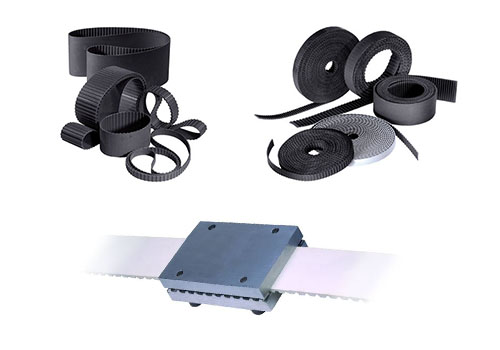
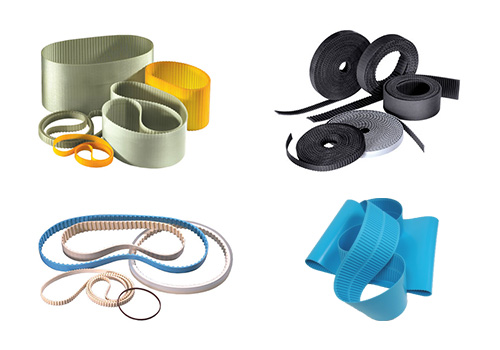
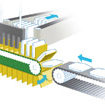
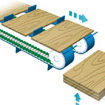
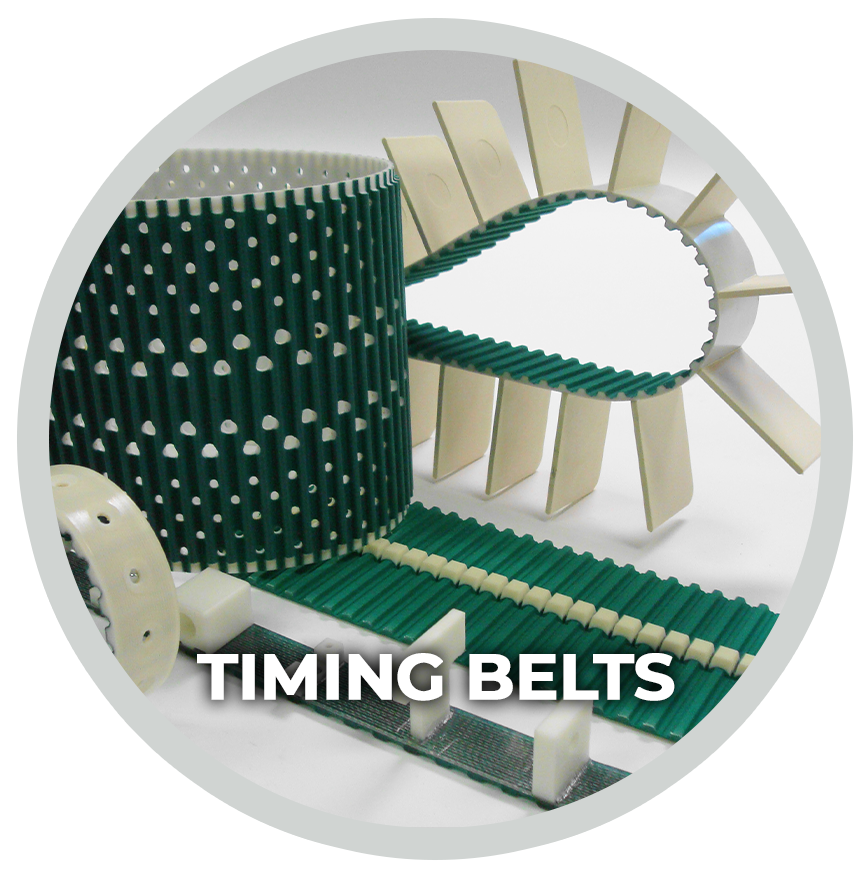
This information is intended for you, the design engineer. Herein you will find application examples and design guidelines for creating your own timing belts with profiles. Timing Belts can provide exceptionally accurate synchronized conveying of products. Ideal for assembly, packaging, inserting and other automation applications. Timing belts are available in any length and can be specified in one tooth increments. F. N. Sheppard timing belts have been used extensively as reliable profiled timing belts. The requirements in automation and material handling are diverse. Often, the designer is challenged to come up with innovative concepts to solve differing requirements depending on the product to be conveyed and function to be solved. We offer an extensive line of synchronous belts and a wide selection of stock profiles. It allows for innovative design solutions for dividing, stepping and positioning. When you are confronted with a drive or conveying problem, just call on us. A quick phone call can allow us to assist you in finding the desired solution or we can provide you with our suggestions.

Profile Belts
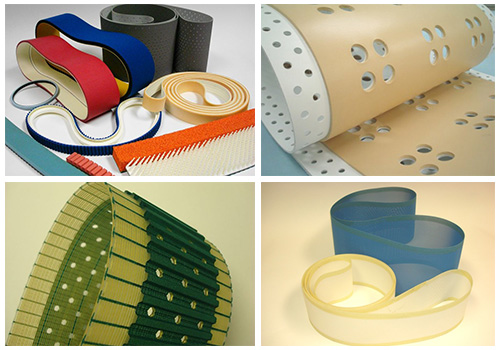
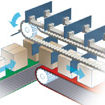
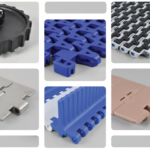
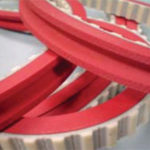
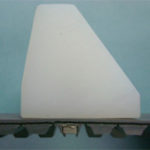
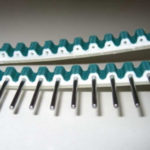
Profiles are commonly referred to as lugs, cleats, pockets and attachments. Profiles are transverse raised sections on the outer surface of a belt used to hold, stabilize, position or transport a product. Profiles are available in many compounds and are applied in various ways. Various ways include: molding, thermal-welding, bonding and machining. Hundreds of profile designs are available from F. N. Sheppard’s mold inventory. Our Applications Engineers can work with you to design any profile to meet your specific requirements. Tooling charges are minimal for most new customized designs. Drawings of some of the profiles are shown in this catalog. Profiles allow for precise indexing with accurate placement on synchronous base belts. This synchronization is not attainable with flat belts.

Position and Thickness of Profiles
The most important consideration while dimensioning a profile is the size of the base of the profile, (the “foot” of the profile), and the position of the profile on the belt. The profile thickness can effect the flexibility of the belt and can determine the minimum allowable pulley diameter. The flexibility of the belt can be maximized, however, by positioning the profile directly over the tooth of the belt. As the thickness of the foot of the profile increases, the minimum pulley diameter must be increased according to the table.

Urethane Welded Profile
The strength of the profile is affected by the type and direction of the force applied to it. Under high loads, the failure mode will normally be either bending and distortion of the profile and belt, or in some cases, the urethane may actually tear. With a load introduced against the profile at a point 1/4” above the belt surface, the strength of the profile is 2,500 lbs. per square inch of welded foot area, or 1724 N/cm2. Our Technical Department would like to assist you with determination of profile strength.

Profile Strength
There are many variables to consider when figuring the strength of the profile. Variables include; method of attachment, compound of profile, belt construction, type of force, and direction of force. F. N. Sheppard has the largest selection of belts and profiles available and many methods of attaching profiles. Your application and other variables are the major factor for considering what method of attachment to use.


HOME | ABOUT US | DESIGN | PRODUCTS | CATALOG | CONTACT US
1261 Jamike Drive • Erlanger, KY 41018 • 800-733-5773 • beltinfo@fnsheppard.com